During the last Bakken run, a Williston seller could hand over a thin disclosure, refuse most repair requests, and still close in three weeks. Buyers took what they could get. That market is gone, and the paperwork that got waved through then is now the paperwork that stalls closings.
The 2026 Williston market is not soft, but it has cooled enough to shift leverage. Redfin put the median sale at $360,000 over the three months ending May 2026, with homes sitting 39 days on the market and only 56 sales closing in May against 73 the year before. Movoto's June 2026 read had days on market at 40, down 34% year over year on the list side. Buyers are still buying, but they have room to negotiate on inspection findings, and their agents know it. That changes what a seller should hand over on day one.
The statute most Williston sellers still misread
North Dakota gets described as a "buyer beware" state, and technically that is still true at common law. The statute that governs a brokered sale is not.
Under North Dakota Century Code § 47-10-02.1, when a real estate licensee is involved in the transaction and the property is a residential dwelling with no more than four units, the seller must give the buyer a written disclosure covering latent defects, general condition, environmental issues, structural systems, and mechanical issues. The North Dakota Real Estate Commission's model form satisfies the requirement, and virtually every brokered transaction in Williams County uses it or a substantially similar form.
The old version of the statute applied only to owner-occupied primary residences. The 2021 amendment expanded it to any one-to-four unit residential dwelling, which means investor-owned rentals, second homes, and duplexes in town are now inside the disclosure net. Sellers who last transacted before that change often assume they can hand a rental over blank. They cannot.
The duty itself is older than the form. In Holcomb v. Zinke, 365 NW2d 507 (ND 1985), the North Dakota Supreme Court held a seller liable for concealing a septic system that backed up into the basement if it was not pumped every couple of weeks. That case still frames what "material fact" means for a Williston seller today: if a reasonable buyer walking the property could not see it, and you know about it, it goes on the form.
Who is genuinely exempt, and who only thinks they are
A handful of transactions fall outside the written-disclosure requirement. The statute lists them plainly:
- Newly constructed residential real property with no previous occupancy
- Sales made pursuant to a court order
- Transfers between government agencies
- Sales administering a decedent's estate, guardianship, conservatorship, or trust
- Transfers between co-owners
- Transfers to a spouse, child, parent, sibling, grandchild, or grandparent
Two of these matter constantly in Williston. Builder-direct new construction sales, common in Williston Square and the newer subdivisions ringing the west side, are exempt on the first sale. The moment that same home resells a year later, it is not. Family transfers are exempt too, which comes up often on Williams County acreage that has stayed in a family for a generation.
Everything else, including the "I'm selling as-is" seller, still owes the written disclosure. As-is in North Dakota means the seller is not agreeing to make repairs. It does not mean the seller can conceal what they know.
Williams County sits in the EPA's highest radon zone
This is the single item that catches Williston sellers off guard most often, and it is the one where 2026 buyer behavior has changed the most.
Williams County is classified Zone 1 on the EPA's Map of Radon Zones for North Dakota, the highest of three tiers. Zone 1 means the predicted average indoor screening level is above the EPA's 4 pCi/L action threshold. North Dakota as a state is predominantly Zone 1. That geologic reality was true during the boom too. What is new is that buyers now routinely order a radon test alongside the general inspection, and lenders and buyer agents are treating a result above 4 pCi/L as a real negotiation point rather than a shrug.
The math is not punishing for a prepared seller. A professional 48-hour test runs roughly $189 to $300 in this region. A full mitigation system typically lands between $800 and $1,500 installed, depending on the foundation. The North Dakota Department of Environmental Quality maintains a public list of measurement and mitigation contractors who meet EPA guidelines, and Williston has local capacity for the testing side, including Eye Spy Inspections, which handles radon, water, mold, and air-quality work out of Williston for the North Dakota and northeast Montana market.
The seller who tests before listing controls the narrative. A pre-listing result of 2.8 pCi/L becomes a disclosed known level, not a surprise on inspection day. A result of 5.4 pCi/L gives the seller time to mitigate, retest, and list with a passive or active system already in place. The seller who waits for the buyer's inspector is negotiating with a number they did not choose, on a timeline the buyer controls.
Freeze-thaw is the second friction point
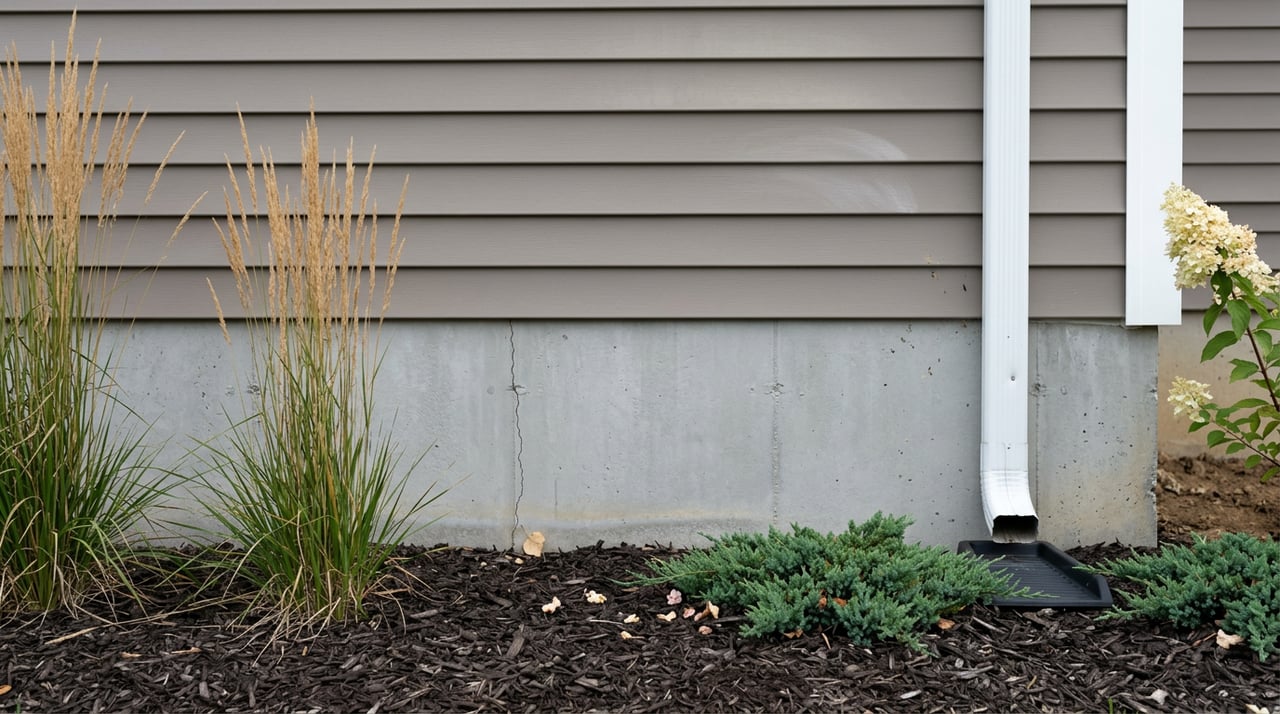
Williston winters cycle across freezing repeatedly, and older stock north and east of downtown shows it. Foundation cracking, settling, and slab movement are recurring items on inspection reports here, and they are exactly the kind of latent condition the statute is asking about under "structural systems." A hairline crack a seller has watched for a decade without change is a disclosable known condition, not a defect to hide. The disclosure form has space for that context, including what was done, when, and by whom.
Basement moisture is the corollary. On homes built before the current drainage standards, spring melt can push water through a wall that stays dry the rest of the year. Buyers touring in July do not see it. Sellers who have lived through a March know exactly where the wet corner is.
Well and septic on the acreage parcels
For sellers outside the Williston city limits, the disclosure exposure widens. Rural Williams County acreage that runs on a private well and septic system carries its own inspection layer, and both belong on the disclosure form. Well flow rate, water quality test history, septic pump dates, drainfield condition, and any known back-ups all read as material facts under the Holcomb v. Zinke standard. Buyers on financed acreage purchases will often be required by the lender to produce a current well water test regardless of what the seller has on file.
What the 2026 numbers actually mean for a seller
The interpretive move is this: median price data alone tells a Williston seller nothing useful about their leverage. The volume and time-on-market numbers do.
Fifty-six recorded May 2026 sales in Williston, against 73 the previous May, is a 23% drop in transaction volume. That is the number that shifts leverage. A cooling volume market with a stable median means the homes selling are the well-presented, cleanly disclosed ones. Marginal listings sit. When a buyer under those conditions gets an inspection report flagging elevated radon, foundation cracking, or a well test the seller cannot explain, they are more likely to walk than to renegotiate, because there is a comparable listing three streets over.
Steadier isn't the same as easy. The Bakken's underlying activity has softened in the first half of 2026, with the state rig count near 32 against 39 a year earlier and North Dakota crude running roughly 16% under prior-year prices. Buyers are more cautious with cash reserves, which makes them tougher on inspection credit requests. The seller who removes the surprises removes the leverage.
A pre-listing sequence that fits this market
For most Williston sellers of a resale home, the order of operations that saves the closing looks like this:
- Order the seller's disclosure form early and fill it in slowly, not the night before offers come in. Pull permit records, service invoices, and any prior inspection reports first.
- Book a professional radon test before the sign goes up. Two days of closed-house monitoring, then a written result to attach to the disclosure.
- Walk the foundation with a flashlight in daylight. Note every crack and its history. Photograph water lines in the basement if any exist.
- On acreage, pull well and septic records now. If the well has not been tested in the last twelve months, test it.
- If any of the above surfaces something meaningful, decide whether to remediate before listing or price accordingly and disclose. The decision is yours, but it must be made before a buyer's inspector makes it for you.
FAQ
Does the disclosure form apply if I sell for sale by owner with no agent involved? The statute's brokered-transaction trigger does not apply, but the common-law fraud and material-defect duty from Holcomb v. Zinke still does. If a buyer's agent is involved on the other side, that agent will almost always require a written disclosure to protect their client.
I'm selling a rental duplex I've never lived in. Am I off the hook? No. The 2021 amendment brought one-to-four unit residential dwellings into the statute regardless of owner occupancy, and material fact disclosure applies.
If my radon test comes back at 3.2 pCi/L, do I have to mitigate? The EPA recommends considering mitigation between 2 and 4 pCi/L, and requires action at 4 or above. Between 2 and 4 is a disclosed known level, and how you handle it is a market decision, not a legal one.
What if I've never had a problem with the foundation crack in my basement? Disclose it with the context you have. A known condition described in good faith is not a defect concealed.
Selling in this market rewards preparation over speed. If you are weighing a Williston listing in the next six months and want a clear-eyed read on what your specific home needs to show before it goes live, Carla Kemp will walk the property, pull the records, and give you a straight answer. Get your free home valuation to start the conversation.