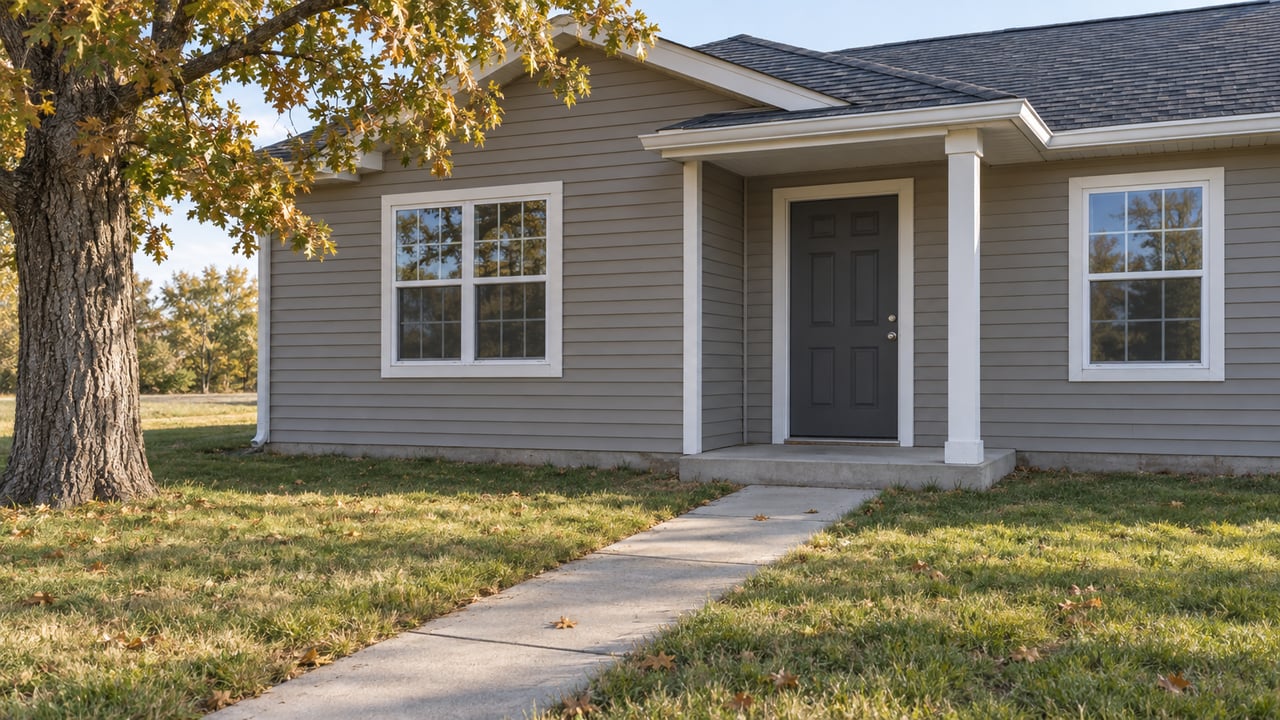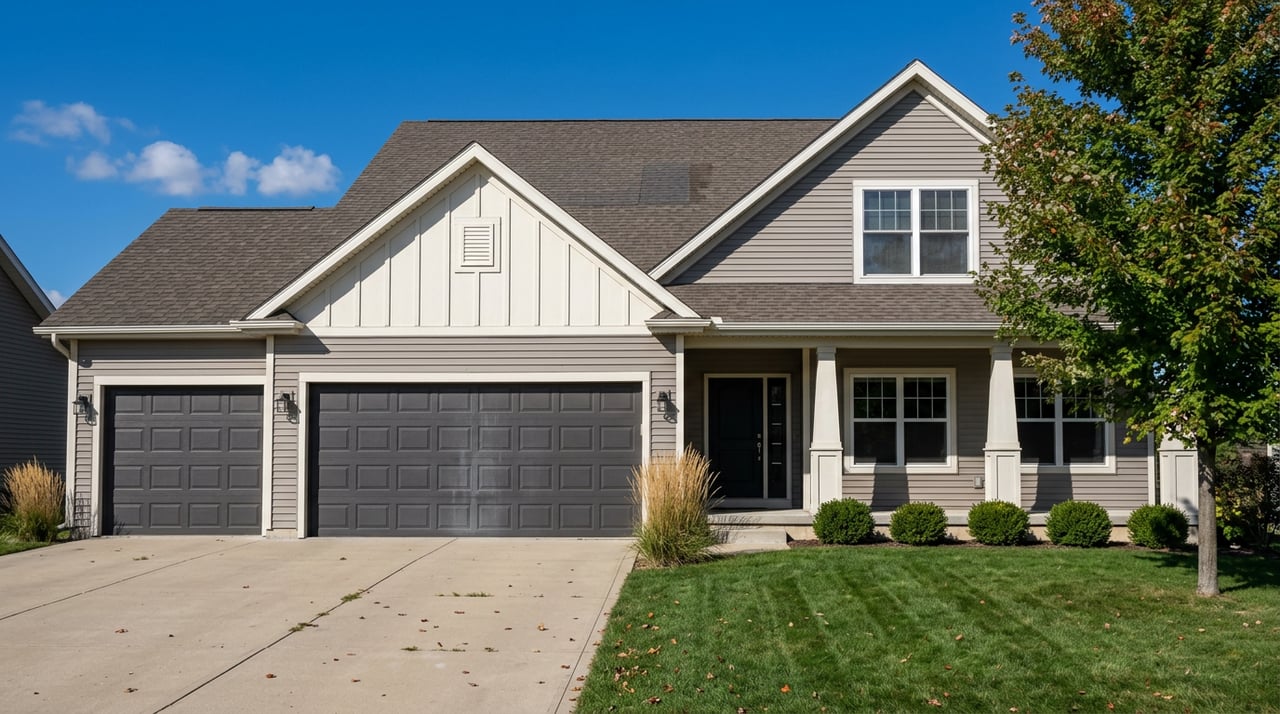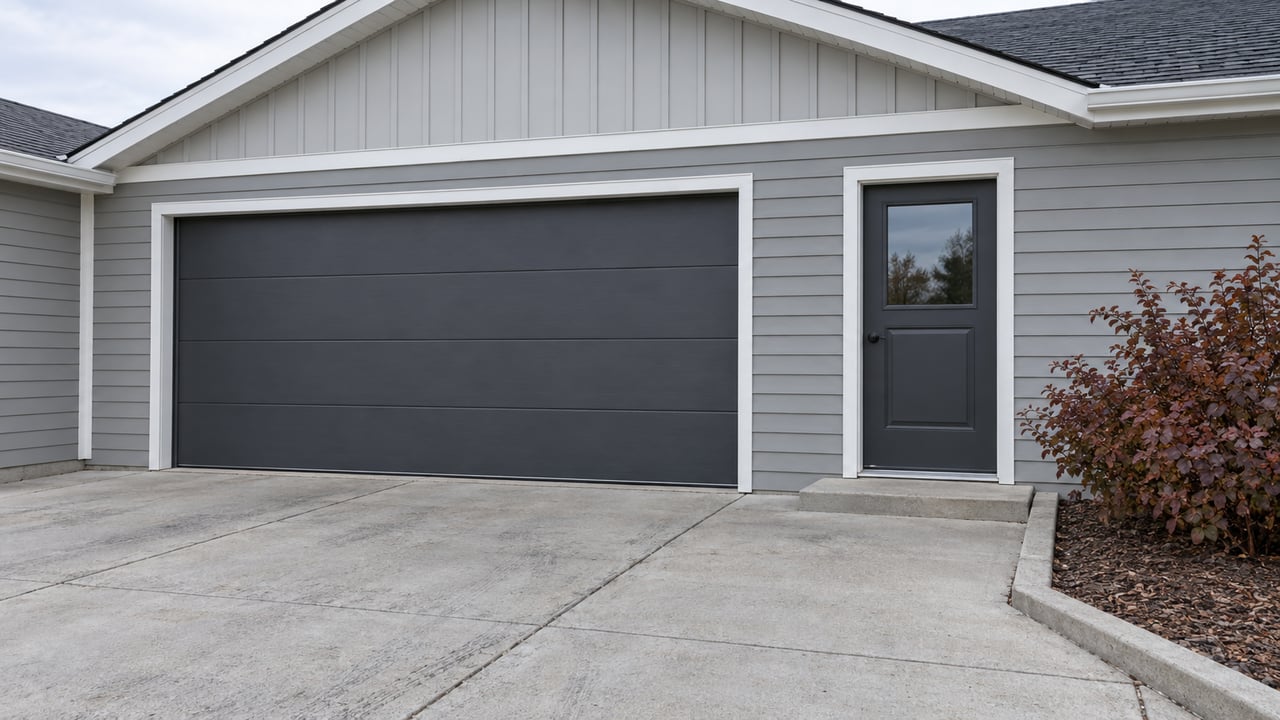
Williston Shop Condos has two rent numbers for the same space. The project's marketing calculator assumes that comparable shop space in Williston leases for $16 to $20 per square foot per year, plus NNN charges. In May 2026, developer Jerry Schauer told the Williston Herald that some units in the project would also be offered for rent at $1,700 to $1,800 per month. Spread across these unit sizes, that rent works out to about $9 to $14 per square foot per year. Whichever number you put into the own-vs-rent comparison decides how it comes out.
Using the project's own rent quote, a financed purchase costs more each month than renting. That doesn't make owning a bad choice. It means the reasons to buy are control, equity and the right to lease the unit out. Monthly savings aren't one of them.
What's being built off Highway 2
The project sits at 313 60th Avenue West, on a nine-acre lot just off Highway 2 on Williston's west edge. Schauer, who started Schauer Construction in Bismarck around 2008, is building it through Blue Water Development. The current schedule, as reported after the Aug. 29 open house:
- Phase 1, fall 2026: 22 units
- Phase 2, fall 2027: 24 units
- Phase 3, fall 2028: 15 units
The phase counts differ slightly from the May report, which listed 22, 22 and 17 units. Units are priced at $225 per square foot, so they run from $337,500 to $513,000 for 1,500 to 2,280 square feet. The association fee is $1,500 a year. Late this summer, the project's marketing site showed 18 of the 22 Phase 1 units still available, with some marked under contract.
Every unit comes with a 14-foot-plus overhead door, 16-foot sidewalls, a 24-foot trough floor drain, a three-quarter bath with shower, heat and air conditioning, and one-hour fire-rated walls between units. The association handles snow removal, landscaping, common-area maintenance, exterior building insurance, and water, sewer and garbage.
Two rent assumptions, one building
The calculator's default example is a 32-by-55 unit of 1,760 square feet with a $400,000 price, 20% down, a 7% rate and a 20-year loan. It estimates principal and interest at $2,481 a month and adds $125 in association dues, for a total of $2,606. Against that, it puts renting the same space at $3,227 a month, using $18 base rent plus $4 in NNN and operating costs per square foot.
Here's how the same 1,760-square-foot unit compares under each rent assumption.
| Scenario for a 1,760 SF unit | Monthly rent | Implied $/SF/yr |
|---|---|---|
| Calculator default, $18 base + $4 NNN | $3,227 | $22.00 |
| Developer-quoted rent, low end | $1,700 | about $11.59 |
| Developer-quoted rent, high end | $1,800 | about $12.27 |
The developer's figures come from the May Herald story. That story doesn't say which unit sizes rent at that price or whether utilities and dues are passed through to tenants, so treat the per-square-foot math as an estimate. Across the full size range, the quoted rent runs from about $14.40 per square foot per year for a 1,500-square-foot unit at $1,800 to about $8.95 for a 2,280-square-foot unit at $1,700.
The calculator's $16-to-$20 range describes other shop space around Williston, and some of that space may well rent at those rates. The rent quoted inside this project is lower, though. For anyone who could rent a unit here instead of buying one, the in-project rent is the comparison that applies.
The line item the calculator leaves out
The calculator says its figures exclude taxes, contents insurance and utilities. Of those three, property tax makes the biggest difference.
The North Dakota Office of State Tax Commissioner specifically lists shop condos as commercial property. Commercial taxable value is 5% of true-and-full value, and the tax equals taxable value times 0.001 times the total mills. Williams County's 2025 Mill Levy Book lists two Williston city levy districts, at 200.760 mills and 181.830 mills. The county also notes that some properties carry a separate voter-approved school-bond levy. These are 2025 rates. A specific unit's tax district and assessed value will set its actual bill.
As an illustration, here's the math for a 1,760-square-foot unit at $225 per square foot, or $396,000:
- Taxable value: $396,000 × 5% = $19,800
- Value of one mill: $19,800 × 0.001 = $19.80
- At 181.830 mills: about $3,600 a year, or $300 a month
- At 200.760 mills: about $3,975 a year, or $331 a month
Add that to the calculator's $2,606 and a financed purchase costs roughly $2,900 to $2,940 a month, before utilities and contents insurance. The developer's quoted rent is $1,700 to $1,800 for space in the same buildings. That leaves a gap of roughly $1,100 to $1,240 a month on the cost side of owning, on top of the $80,000 down payment in the calculator's example.
Where owning still makes sense
The extra monthly cost buys a few things that renting doesn't. The project lets owners customize their units fully, including adding lofts, though any added construction is the buyer's responsibility. Owners can also lease their units to other businesses, and utilities are metered separately for each unit. Each payment builds equity. The calculator estimates $186,324 in equity after 10 years for its example unit, using its own assumptions. An owner's monthly cost is also mostly fixed by the loan, while a tenant's rent gets reset at every renewal.
Schauer has described the demand he's seeing this way:
"The more people I talk to, it seems like there's a massive need for this particular type of shop space. It's very unaffordable for a lot of small businesses to come here, so this will offer a lot of small business shop space to rent around the Williston area."
The last part of that quote is about renting. The project offers small operators a lower-cost way to rent shop space, and it offers buyers the chance to become the landlord.
The same math from the landlord's side
The ability to rent out a unit draws investors, and the marketing site lists them among its target buyers. Here's an illustrative example for the smallest unit, 1,500 square feet at $337,500:
- Gross rent at $1,750 a month, the middle of the quoted range: $21,000 a year
- Association dues: $1,500
- Estimated property tax at the two 2025 Williston district rates: about $3,070 to $3,390
- Net before vacancy, interior repairs and contents insurance: about $16,100 to $16,430
That works out to a return of roughly 4.8% on the purchase price. The calculator assumes a 7% loan rate. When the property earns less than the cost of borrowing, leverage cuts into returns. A cash buyer earns the 4.8%, while a buyer who finances with 80% debt can expect negative cash flow until rents rise. These figures are our own arithmetic, not financial or tax advice.
What drives demand for this kind of space
Interest in small shop space here tends to follow the oil patch. In September 2026, the North Dakota Department of Mineral Resources showed 34 active rigs in western North Dakota, while Baker Hughes counted a September state average of 28. Nine frac crews were working, and Williams County produced 8.92 million barrels of oil in July. In January 2026, the North Dakota Monitor reported that Continental Resources was pausing drilling in the state. It also noted that Williston's concentration of drilling and fracking crews makes local employment vulnerable to operator cutbacks.
That affects owners and investors differently. An owner-operator with a steady service business is less exposed to the swings, because a slower year doesn't take the shop away. An investor counting on a tenant's rent is betting that the tenant's business stays steady through a down cycle. No published 2026 benchmark for Williston industrial vacancy or rent exists. The most recent market snapshots are from mid-2025, which is too old to rely on for a decision this fall.
FAQ
Are Williston shop condos taxed as residential or commercial property? They're taxed as commercial. The North Dakota Tax Commissioner lists shop condos as commercial property, with taxable value set at 5% of true-and-full value.
Can I buy a unit and rent it to another business? Yes. The project's FAQ says purchased units can be leased to other entities.
What does it take to reserve a Phase 1 unit? You'll need a signed purchase agreement and earnest money. Financed buyers also need a preliminary lender commitment.
When do later phases open? Phase 2 is scheduled for fall 2027 and Phase 3 for fall 2028, according to the Herald's September 2026 report.
If you're weighing a shop condo against your current lease, or against selling or repurposing a building you already own, Carla Kemp can run the comparison with your real figures: your rent, your tax district and your financing terms. Ask for a free valuation of the property you have now so the comparison starts from real numbers.